Skip to product information
1 of 1

0 LEFT | SOLD OUT

mots-c

mots-c

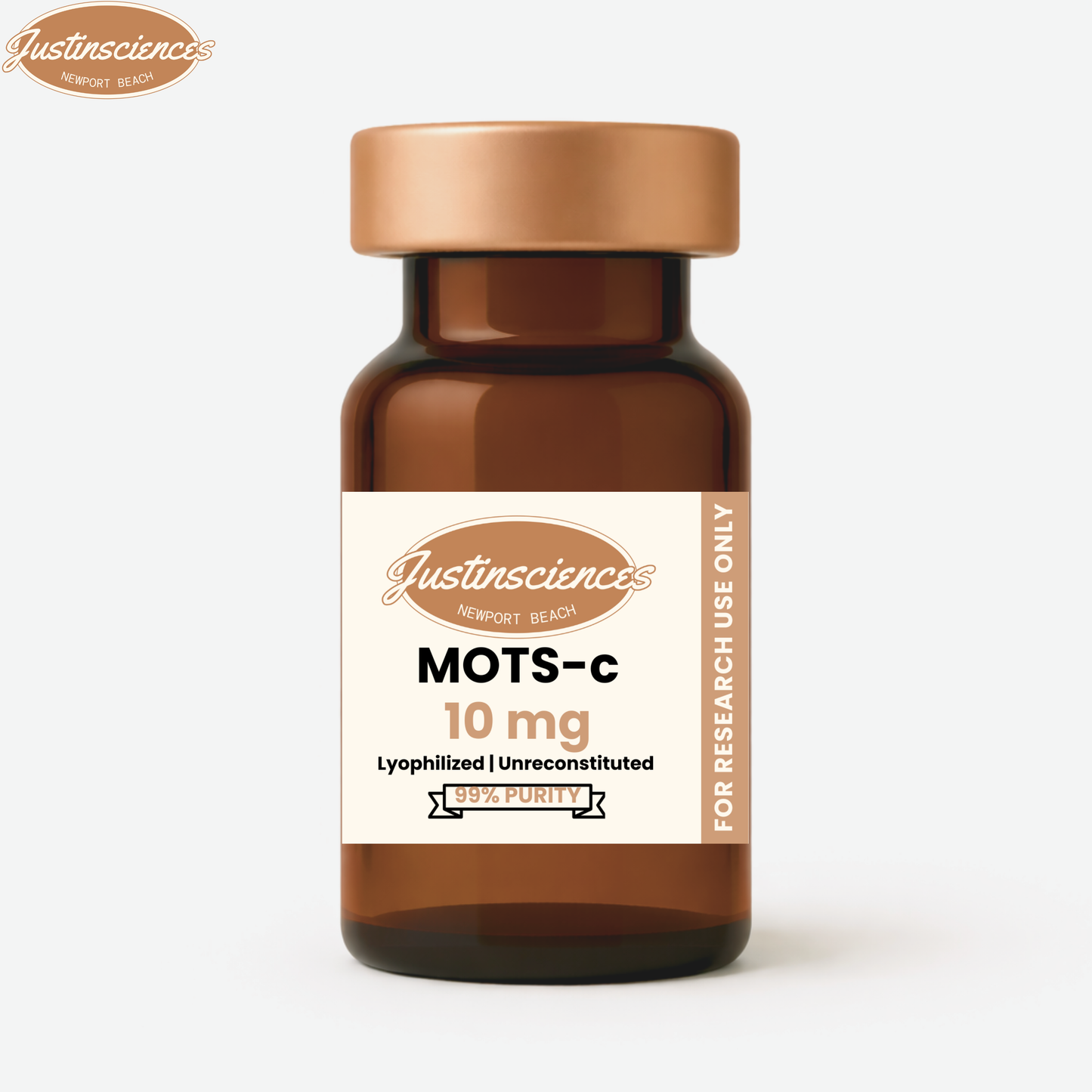
10 MG • Lyophilized powder • Research use only

Exercise-induced molecule doubles running capacity across all ages in clinical trials

🧬 First mitochondrial-encoded hormone that translocates to nucleus to reprogram metabolism genes

🏃 12-fold muscle increase and 50% blood elevation during exercise mimicking endurance training effects

BUNDLE & SAVE

mots-c

Regular price $99.00
Sale price $99.00 Regular price
SAVE % Sold out
  • American Express
  • Apple Pay
  • Diners Club
  • Discover
  • Google Pay
  • Mastercard
  • PayPal
  • Shop Pay
  • Visa

Arrives by - through -.

View full details
  • ⚡ Folate-AICAR-AMPK Metabolic Pathway Activation

    Targets methionine-folate cycle to inhibit de novo purine biosynthesis, causing accumulation of AICAR (5-aminoimidazole-4-carboxamide ribonucleotide), a potent endogenous AMP analog that directly activates AMPK without requiring ATP depletion. AMPK activation triggers downstream metabolic effects: increases glucose uptake via GLUT4 translocation, enhances fatty acid oxidation through ACC phosphorylation and CPT-1 activation, stimulates mitochondrial biogenesis via PGC-1α upregulation, improves insulin sensitivity in skeletal muscle. Also increases NAD+ levels and partially involves SIRT1 pathway for additional metabolic benefits.

  • 🧬 Stress-Induced Nuclear Translocation & Gene Reprogramming

    Under metabolic stress (glucose restriction, serum deprivation, oxidative stress), MOTS-c translocates from mitochondria to nucleus in AMPK-dependent manner within 0.5-3 hours. Nuclear MOTS-c regulates broad range of genes including those with antioxidant response elements (ARE), interacting with stress-responsive transcription factors NFE2L2/NRF2, ATF1/ATF7, and JUND. RNA-seq analysis reveals regulation of genes involved in metabolism, proteostasis, antioxidant defense, and cellular stress adaptation. Represents first demonstration of mitochondrial genome-encoded factor actively regulating nuclear gene expression, establishing integrated bi-genomic cross-communication mechanism for metabolic homeostasis.

  • 🏋️ Exercise-Mimetic Effects & Physical Performance Enhancement

    Functions as exercise-induced myokine: human skeletal muscle shows 11.9-fold (nearly 12-fold) increase after acute exercise, circulating levels increase 1.6-fold during exercise and 1.5-fold post-exercise, returning to baseline after 4 hours. Mouse studies demonstrate ~2-fold improvement in treadmill performance across all ages (young 2mo., middle-aged 12mo., old 22mo.), with old mice doubling running capacity and outrunning untreated middle-aged cohorts. Regulates nuclear genes related to metabolism and proteostasis, skeletal muscle glucose/amino acid metabolism, myoblast adaptation to metabolic stress, and HSF1-mediated protein homeostasis pathways.

  • 🔥 Multi-Tissue Metabolic Homeostasis & Anti-Obesity Actions

    Prevents diet-induced obesity by increasing energy expenditure and reducing fat accumulation in liver (prevents NASH), adipose tissue, and systemic circulation. Modulates three key metabolic pathways dysregulated in obesity/T2DM: reduces sphingolipid metabolism (ceramides and deoxysphingolipids linked to insulin resistance), decreases monoacylglycerol levels (affecting lipoprotein lipase activity via ANGPTL regulation), and reduces dicarboxylate metabolism (alternative fuel substrates during impaired glucose metabolism). Improves brown adipose tissue (BAT) function and mitochondrial number. Regulates adipose homeostasis through AMPK pathway preventing ovariectomy-induced metabolic dysfunction, reduces inflammatory cytokines while increasing anti-inflammatory markers.

Compound Name
MOTS-c (Mitochondrial Open Reading Frame of the 12S rRNA-c)
Peptide Length
16 amino acids
Synonyms
MT-RNR1 peptide, Mitochondrial-derived peptide
CAS Number
1627580-64-6
PubChem CID
146675088, 255386757
UNII
Not assigned
Molecular Formula
C₁₀₁H₁₅₂N₂₈O₂₂S₂
Average Molecular Weight (Free Compound)
2174.64 g/mol
Targets (Research)
(AMPK), folate cycle enzymes (MTHFR, GART, ATIC, MTR), nuclear transcription factors (NFE2L2/NRF2, ATF1/ATF7, JUND, HSF1), PGC-1α (peroxisome proliferator-activated receptor gamma coactivator 1-alpha)
Backbone / Design
Naturally occurring 16-amino acid peptide encoded within the mitochondrial 12S ribosomal RNA gene (MT-RNR1) at nucleotide positions 1,343-1,389 of mitochondrial DNA, representing first identified mitochondrial-encoded regulatory peptide targeting extra-mitochondrial compartments including nucleus and systemic circulation
Modification Summary
Native unmodified sequence MRWQEMGYIFYPRKLR (Met-Arg-Trp-Gln-Glu-Met-Gly-Tyr-Ile-Phe-Tyr-Pro-Arg-Lys-Leu-Arg) with no post-translational modifications, translated in cytoplasm despite mitochondrial genome origin, contains two hydrophobic regions (YIFY at positions 8-11 and RKLR at positions 13-16) critical for nuclear localization and subcellular trafficking, C-terminal amide not present, evolutionarily conserved across species indicating functional importance
Salt / Counterion
None (pure free base, lyophilized)
Appearance
White to off-white crystalline powder (unreconstituted)
Vial Contents
MOTS-C Lyophilized Powder (Research Grade)
Intended Use
For laboratory research use only; not for human or veterinarian use.
  • Storage — Lyophilized

    Store sealed vials at −20 °C to −80 °C. Keep desiccated, protected from light. Avoid repeated warming/cooling.

  • Storage — After Reconstitution

    Short term 2–8 °C. For longer term, aliquot and freeze ≤ −20 °C. Do not refreeze the same aliquot.

  • Reconstitution (Lab Use Only)

    Slowly add 6ML Bacteriostatic Water, also known as Reconstitution Solution into the vial. Gently swirl until thoroughly mixed; do not shake.

  • Handling (Lab Use Only)

    Use alcohol pads. Wipe the rubber stopper before and after each puncture.

    Sterile tools only. New sterile syringe/needle each time; don’t touch needle tips.

    Gentle mix. After adding diluent, swirl/roll—don’t shake or vortex.

    Minimize contamination. If clarity matters, transfer through a 0.22 µm sterile filter into a sterile, low-binding tube.

  • MOTS-c interacts synergistically with exercise intervention to regulate PGC-1α expression, attenuate insulin resistance and enhance glucose metabolism in mice via AMPK signaling pathway

    Biochimica et Biophysica Acta - Molecular Basis of Disease·2021

    Demonstrated synergistic interaction between MOTS-c and exercise intervention in C2C12 myotubes and mice. C2C12 cells exposed to AMPK inhibitor (Compound C) showed decreased PGC-1α and MOTS-c expression, confirming AMPK-dependent mechanism. Combined MOTS-c treatment with exercise training enhanced PGC-1α expression beyond either intervention alone, improved mitochondrial biogenesis, attenuated insulin resistance more effectively, and enhanced glucose metabolism. Molecular mechanism: AMPK induces MOTS-c expression through PGC-1α, creating positive feedback loop. Results support MOTS-c as exercise-mimetic agent working synergistically with actual exercise to amplify metabolic benefits including improved insulin sensitivity and glucose homeostasis.

    • Exercise synergy
    • PGC-1α
    • AMPK pathway
    • Insulin resistance
    • Glucose metabolism
  • MOTS-c is an exercise-induced mitochondrial-encoded regulator of age-dependent physical decline and muscle homeostasis

    Nature Communications·2021

    Landmark study demonstrating MOTS-c as exercise-induced peptide improving physical performance across all ages. Mouse studies: systemic treatment enhanced treadmill running ~2-fold in young (2mo.), middle-aged (12mo.), and old (22mo.) mice; old mice doubled running capacity and outran untreated middle-aged cohorts. Late-life treatment (starting 23.5 mo., 3x/week) improved healthspan with enhanced grip strength, stride length, walking distance, reduced blood glucose. Human exercise study: skeletal muscle MOTS-c increased 11.9-fold post-exercise (remained elevated 4h), circulating levels increased 1.6-fold during exercise. Mechanisms: regulates nuclear genes (metabolism, proteostasis), skeletal muscle metabolism (glucose, amino acids), myoblast stress adaptation via HSF1 activation.

    • Exercise-induced
    • Aging
    • Physical performance
    • Healthspan
    • Muscle homeostasis
  • The Mitochondrial-Encoded Peptide MOTS-c Translocates to the Nucleus to Regulate Nuclear Gene Expression in Response to Metabolic Stress

    Cell Metabolism·2018

    First demonstration that mitochondrial genome-encoded factor actively regulates nuclear gene expression. Spatial/temporal analysis shows MOTS-c translocates from mitochondria to nucleus within 0.5-3 hours following glucose restriction, serum deprivation, or oxidative stress (tBHP). Nuclear translocation requires AMPK activation (blocked by Compound C or siRNA against AMPKα). RNA-seq revealed MOTS-c regulates broad range of genes including bona fide NRF2-target genes with antioxidant response elements (ARE). Immunoprecipitation confirmed MOTS-c interaction with stress-responsive transcription factors NFE2L2/NRF2, ATF1/ATF7, JUND. Wild-type but not nuclear-null mutants significantly improved cellular survival under metabolic stress. Establishes integrated bi-genomic cross-communication mechanism.

    • Nuclear translocation
    • Gene expression
    • Metabolic stress
    • NRF2
    • Mitonuclear communication
  • The mitochondrial-derived peptide MOTS-c promotes metabolic homeostasis and reduces obesity and insulin resistance

    Cell Metabolism·202415

    Original discovery study identifying MOTS-c as 16-amino-acid peptide encoded in mitochondrial 12S rRNA. Primary target organ: skeletal muscle. Mechanism: inhibits folate cycle and de novo purine biosynthesis, increases AICAR levels (5-fold in stable cells), activates AMPK pathway (phosphorylation of Thr172), downstream effects on ACC/CPT-1 for fatty acid oxidation. Mouse studies: prevented age-dependent insulin resistance in old mice, prevented high-fat-diet-induced insulin resistance and obesity, reduced weight gain through increased energy expenditure, decreased liver fat accumulation. Increased NAD+ levels, partially involves SIRT1. Coordinates cellular glucose, mitochondrial, and fatty acid metabolism.

    • Original discovery
    • Metabolic homeostasis
    • Obesity prevention
    • Insulin resistance
    • AMPK activation
  • The mitochondrial-derived peptide MOTS-c is a regulator of plasma metabolites and enhances insulin sensitivity

    Physiological Reports·2022

    Unbiased metabolomics analysis in diet-induced obese (DIO) mice identified three key metabolic pathways reduced by MOTS-c treatment: sphingolipid metabolism (ceramides, deoxysphingolipids—established T2DM risk predictors), monoacylglycerol metabolism (regulates lipoprotein lipase activity via ANGPTL3/4/8 modulation), and dicarboxylate metabolism (alternative fuel substrates during impaired glucose metabolism). These pathways are upregulated in obesity/T2DM models. MOTS-c improves insulin sensitivity and increases beta-oxidation to prevent fat accumulation through modulating these plasma metabolite pathways. Comparison with other MDPs (humanin, SHLP2) shows MOTS-c uniquely modulates monoacylglycerol and dicarboxylate pathways while sharing common effects on sphingolipids and glutathione. Provides mechanistic understanding of weight/fatty liver reduction.

    • Metabolomics
    • Plasma metabolites
    • Sphingolipids
    • Insulin sensitivity
    • Obesity mechanisms
1 5