Skip to product information
1 of 1

0 LEFT | SOLD OUT

dsip

dsip

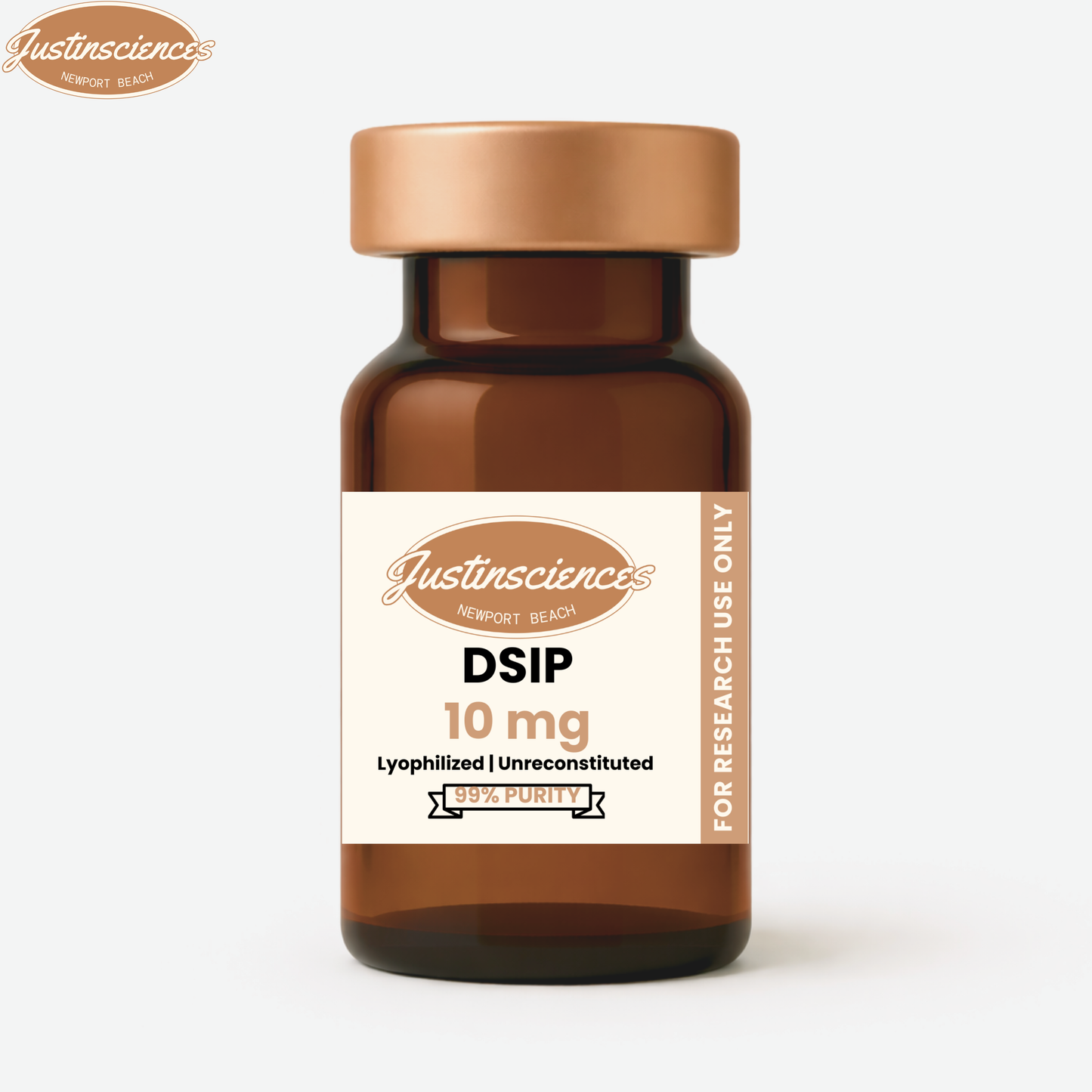
10 MG • Lyophilized powder • Research use only

💤 Studied for its effects on delta-wave sleep architecture and EEG patterns

🧬 Modulates stress-hormone pathways like ACTH and corticosterone response

⚡ Research shows interaction with GABAergic and opioid receptor systems

BUNDLE & SAVE

dsip

Regular price $99.00
Sale price $99.00 Regular price
SAVE % Sold out
  • American Express
  • Apple Pay
  • Diners Club
  • Discover
  • Google Pay
  • Mastercard
  • PayPal
  • Shop Pay
  • Visa

Arrives by - through -.

View full details
  • 💤 Crosses Blood-Brain Barrier via Active Transport

    DSIP's unique structure allows it to penetrate the CNS through carrier-mediated mechanisms—a property studied for its ability to reach sleep-regulating centers in the hypothalamus and brainstem without enzymatic degradation.

  • 🧠 Modulates Delta Sleep EEG Activity

    Research indicates DSIP influences slow-wave sleep architecture by affecting neuronal firing patterns in the thalamus and cortex—regions involved in generating high-amplitude delta rhythms during NREM stages.

  • ⚖️ Regulates HPA Axis Stress Response

    DSIP has been shown to normalize ACTH and corticosterone secretion under stress conditions—suggesting a modulatory role in hypothalamic-pituitary-adrenal feedback loops that govern circadian and stress-related hormone release.

  • 🔬 Interacts with GABA and Opioid Pathways

    Studies demonstrate DSIP's influence on GABAergic transmission and endogenous opioid systems—mechanisms linked to anxiolytic effects, pain threshold modulation, and sleep-wake cycle regulation in preclinical models.

NAME
DSIP (Delta Sleep-Inducing Peptide)
Peptide Length
9 amino acids (nonapeptide)
Synonyms
DSIP nonapeptide
CAS Number
62568-57-4
PubChem CID
68770
UNII
69431-45-4
Molecular Formula (free peptide)
C₃₅H₄₈N₁₀O₁₅
Average Molecular Weight (free peptide)
848.81 g/mol
Targets (research)
Modulation of CNS sleep centers, HPA axis regulation, GABAergic pathways, and opioid receptor interactions.
Backbone / Design
Natural nonapeptide sequence: Trp-Ala-Gly-Gly-Asp-Ala-Ser-Gly-Glu
Modification Summary
Unmodified linear peptide; original structure as isolated from rabbit cerebral venous blood (1977)
Salt / Counterion
Typically isolated with TFA counterions after lyophilization (exact salt content varies by batch; see COA)
Appearance
White / off-white lyophilized powder (unreconstituted)
Vial Contents
DSIP, lyophilized powder (research grade)
Intended Use
For laboratory research only; not for human or veterinary use.
  • Storage — Lyophilized

    Store vials at −20 °C to −80 °C. Fridge is fine, keep desiccated, protected from light. Avoid repeated warming/cooling.

  • Storage — After Reconstitution

    Short term 2–8 °C. For longer term, aliquot and freeze ≤ −20 °C. Do not refreeze the same aliquot.

  • Reconstitution (Lab Use Only)

    Slowly add 3ML Bacteriostatic Water, also known as Reconstitution Solution into the vial. Gently swirl until thoroughly mixed; do not shake.

  • Handling (Lab Use Only)

    Use alcohol pads. Wipe the rubber stopper before and after each puncture.

    Sterile tools only. New sterile syringe/needle each time; don’t touch needle tips.

    Gentle mix. After adding diluent, swirl/roll—don’t shake or vortex.

    Minimize contamination. If clarity matters, transfer through a 0.22 µm sterile filter into a sterile, low-binding tube.

  • Pichia pastoris secreted peptides crossing the blood-brain barrier and DSIP fusion peptide efficacy in PCPA-induced insomnia mouse models

    Frontiers in Pharmacology·2024

    This study developed a DSIP fusion peptide with cell-penetrating Tat sequence (DSIP-CBBBP) to enhance blood-brain barrier penetration, addressing DSIP's delivery limitations. Using PCPA-induced insomnia mice, researchers evaluated sleep-promoting effects and neurotransmitter modulation. The fusion peptide successfully expressed in Pichia pastoris showed superior BBB crossing ability. Treatment influenced serotonin, glutamate, dopamine, and melatonin levels, demonstrating neurotransmitter balance restoration. Results support DSIP-CBBBP's potential as an improved therapeutic approach for sleep disorders, combining DSIP's sleep-regulating properties with enhanced CNS delivery through the cell-penetrating peptide technology.

    • Drug delivery
    • BBB penetration
    • Neurotransmitters
    • Insomnia model
  • Acute and delayed effects of DSIP (delta sleep-inducing peptide) on human sleep behavior

    International Journal of Clinical Pharmacology, Therapy and Toxicology·1981

    In this double-blind crossover study with six healthy volunteers, intravenous DSIP administration (25 nmol/kg) produced immediate sleep pressure with total sleep time increasing by 59% within 130 minutes compared to placebo. Delayed effects on subsequent night sleep included shorter sleep onset, reduced stage 1 sleep percentage, and improved sleep efficiency. Sophisticated EEG and behavioral analyses revealed no classic sedative effects, suggesting DSIP sustains natural sleep functions rather than inducing pharmacological sedation. The compound was well-tolerated with no psychological, physiologic, or biochemical side effects observed during the study period.

    • Sleep induction
    • Human clinical trial
    • Double-blind
    • Polysomnography
  • Effects of delta sleep-inducing peptide on sleep of chronic insomniac patients: A double-blind study

    Neuropsychobiology·1992

    This double-blind matched-pairs study investigated DSIP's effects in 16 chronic insomnia patients over five consecutive laboratory nights. Patients received 25 nmol/kg intravenous DSIP or placebo before nights 3-5. Polysomnography revealed higher sleep efficiency and shorter sleep latency with DSIP compared to placebo, along with decreased subjective tiredness measures. However, data analysis suggested effects were statistically weak and partially attributable to placebo group variations. Researchers concluded short-term DSIP treatment showed limited major therapeutic benefit for chronic insomnia despite objective improvements in some sleep parameters.

    • Insomnia
    • Clinical trial
    • Double-blind
    • Chronic condition
  • Delta Sleep-Inducing Peptide Recovers Motor Function in SD Rats after Focal Stroke

    Molecules (MDPI)·2021

    This preclinical study investigated intranasal DSIP treatment (120 µg/kg for 8 days) in rats subjected to middle cerebral artery occlusion-induced stroke. While brain infarction volume showed no significant difference between DSIP-treated and vehicle groups, motor performance in the rotarod test significantly recovered in DSIP-treated animals. Testing on days 1, 3, 7, 14, and 21 post-stroke revealed progressive motor coordination improvements only in the DSIP group, confirmed by linear regression analysis showing positive dynamics. Results suggest DSIP accelerates motor function recovery after stroke through mechanisms potentially independent of infarct size reduction, warranting future studies on optimal dosing regimens.

    • Stroke recovery
    • Motor function
    • Neuroprotection
    • Preclinical
  • Successful treatment of withdrawal symptoms with delta sleep-inducing peptide

    European Neurology·1984

    Based on evidence that DSIP possesses agonistic activity on opiate receptors (effects reversed by Naloxone in animal models), this study administered intravenous DSIP (25 nmol/kg) as sole treatment to 67 patients presenting withdrawal symptoms (28 from alcohol, 39 from opiates). Of 49 evaluable patients, DSIP produced beneficial effects in 48 cases (22 alcoholics, 26 of 27 opiate addicts), with immediate onset of action and sustained suspension of somatic symptoms. Anxiety resolved within hours. No major side effects occurred, suggesting DSIP offers a physiologically-based approach for treating established withdrawal syndrome.

    • Withdrawal
    • Addiction
    • Opioid dependence
    • Alcohol dependence
  • DSIP in the treatment of withdrawal syndromes from alcohol and opiates

    European Neurology·1984

    This larger study administered DSIP intravenously to 107 inpatients presenting with alcohol (n=47) or opiate (n=60) withdrawal symptoms. Assessment by physicians and nursing staff showed approximately 87% of evaluable patients in both groups responded favorably. The therapeutic hypothesis was based on Tissot's animal studies showing morphine, alcohol, pentobarbital, and DSIP all induced slow-wave sleep with spindles when injected into the bulbo-mesencephalo-thalamic recruiting system—effects reversed by Naloxone—suggesting DSIP's agonistic activity on opiate receptors might benefit withdrawal treatment. Results supported clinical utility in managing both alcohol and opiate withdrawal syndromes.


    • Withdrawal syndrome
    • Clinical application
    • Alcohol
    • Opiates
1 6